

We are carrying out state-of-the-art research in all fields of physics, ranging from fundamental research to applied and cross-disciplinary research. Our faculty and students work closely and collaboratively within our department and with our colleagues in engineering, chemistry, and biology. Our department has more than 20 research active faculty and more than 60 graduate students mentored by our faculty. Students and postdocs contribute and lead these research projects, which provides them with an excellent hands-on education leading towards the completion of their degrees. Our research is funded by all federal funding agencies and together with our class-room education we are training the STEM workforce of the 21st century. If you are interested in joining our team of highly motivated students and faculty, please have a look at the detailed description of our research fields below. Undergraduates are also strongly encouraged to join our research groups early on. Nearly all of our faculty is actively recruiting undergraduates. This hands-on experience is a crucial component of our student centered education and prepares our students ideally for the labor market and grad-school.
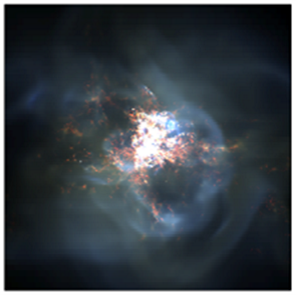
UNT has an active astrophysics research group with experts in observational and theoretical extragalactic astrophysics conducting cutting-edge investigations.
The group consists of several graduate and undergraduate students and is funded regularly by the National Aeronautics and Space Administration and the National Science Foundation.
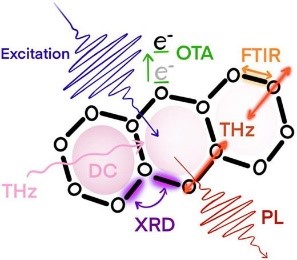
Atomic, Molecular, and Optical physics (AMO) explore the interaction of electromagnetic waves with molecules, matter, and photonic devices. At UNT, we utilize a large variety of different techniques leveraging the visible range of the EM-spectrum, the IR, and the THz range.
We study materials and quantum properties to learn about basic physics governing the propagation of light in materials and integrated photonics.
At UNT 15 Applied Physics groups study materials for their potential in real world applications. We work closely with surface chemists to understand how interfaces alter the properties of devices; with mechanical engineers to determine the real-world properties of novel materials; with biomedical engineers and biologists to tackle the health challenges of this century. Together we develop and study the materials for future electronics, quantum computing, catalysis, and a sustainable future.
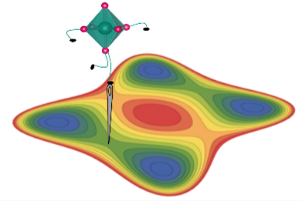 Condensed Matter Physics focuses on the exploration and control of the materials that make up our world. It studies new complex behaviors that emerge when large number of atoms, ions, or molecules are put together. This field aims to harness the building blocks of matter to create materials with unique and useful properties.